
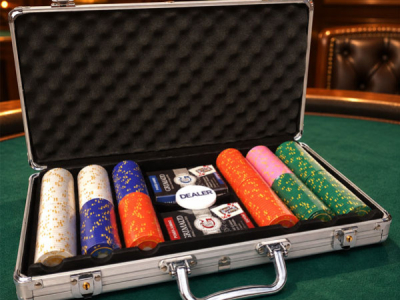
300 or 500 chips? The question comes up before every poker case purchase, and the answer does not depend only on the number of guests. Above all, it depends on what you play: a tournament where everyone starts with the same stack, or a cash game where every chip is worth real money. It also depends on the stack depth you want, i.e. the number of big blinds each player starts with. This guide gives you ready-to-use distributions, chip by chip, for both case sizes.
The basics: what to know before distributing your chips
Stack depth, measured in big blinds
Depth is the starting stack divided by the big blind. A 5,000 stack with 25/50 blinds equals 100 big blinds. Depth sets the pace of the game far more than the amounts printed on the chips.
- Short stack (30 to 60 BB): fast game, lots of all-ins, ideal for a 1.5 to 2-hour turbo or a weeknight session.
- Standard stack (100 BB): the benchmark in tournaments and cash games alike. Enough room to play post-flop; a tournament lasts 3 to 4 hours with 20-minute levels.
- Deep stack (150 to 200 BB): more skill, more bluffs, games of 5 hours or more. It requires more chips per player, so a 500-chip case.
How many chips per player?
Below 15 chips per player, you run out of small change from the very first bets. Above 45, stacks become cumbersome without adding anything to the game. Guidelines:
- Tournament: 20 to 45 chips per player, all handed out at the start. Keep the remaining chips for the color-up (see below).
- Cash game: 20 to 30 chips per player, and at least 40% of the chips kept in the bank for rebuys.
Golden rules for chip values
- The smallest value equals the starting small blind.
- Each value is worth 4 to 5 times the previous one (25, 100, 500, 1,000, 5,000): making change requires no mental arithmetic.
- Keep the same value assignment from one game night to the next: players read stacks faster.
Typical contents of a 300 and 500 chip poker case
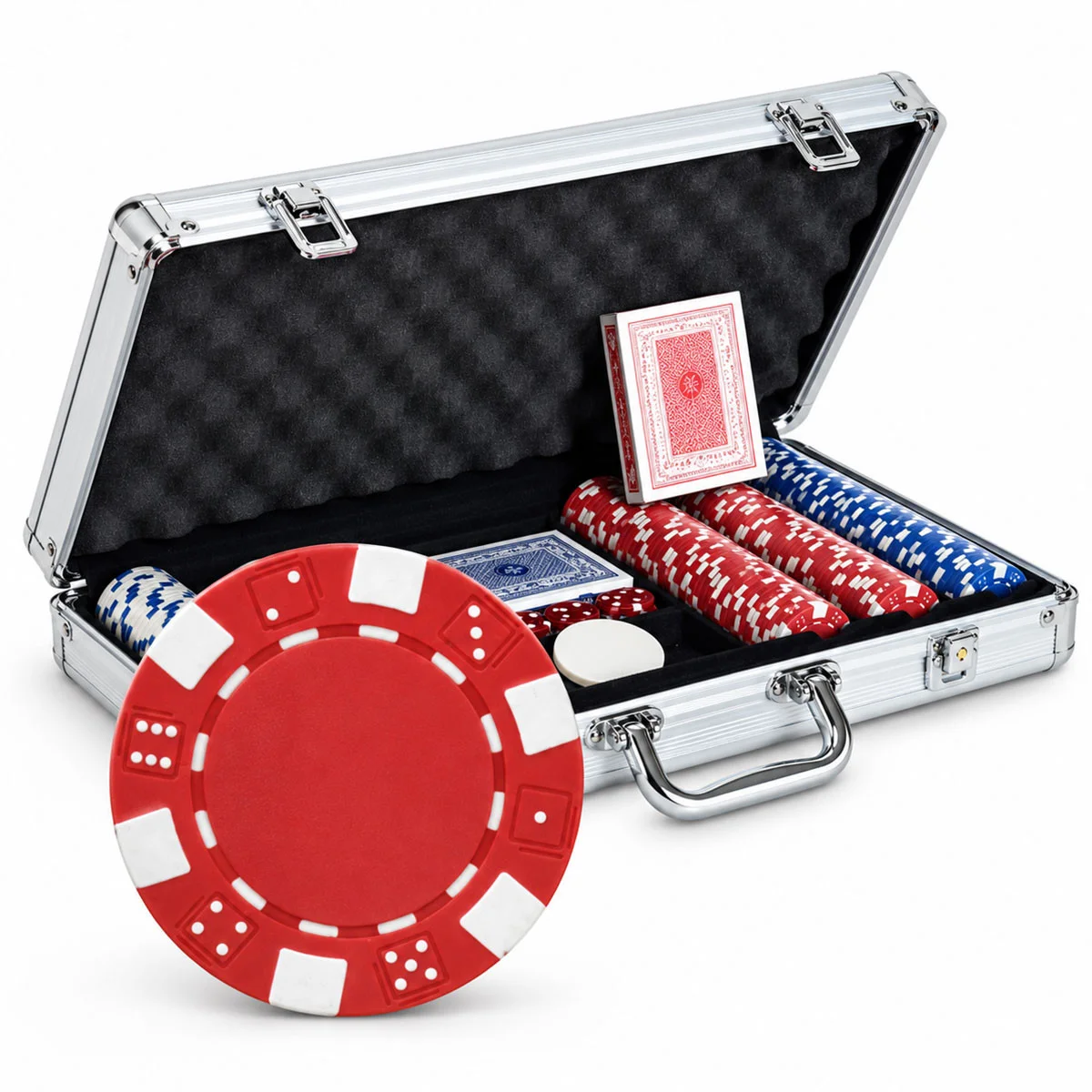
Cases come with 5 series of chips, one per value, with more chips for the small values. The distributions in this guide are based on the most common compositions; check your model's and adjust if needed.
| Series | 300-chip case | 500-chip case |
|---|---|---|
| Smallest value | 100 | 150 |
| 2nd value | 50 | 150 |
| 3rd value | 50 | 100 |
| 4th value | 50 | 50 |
| Highest value | 50 | 50 |
See all poker cases · 300-chip cases · 500-chip cases
300-chip case: tournament distributions
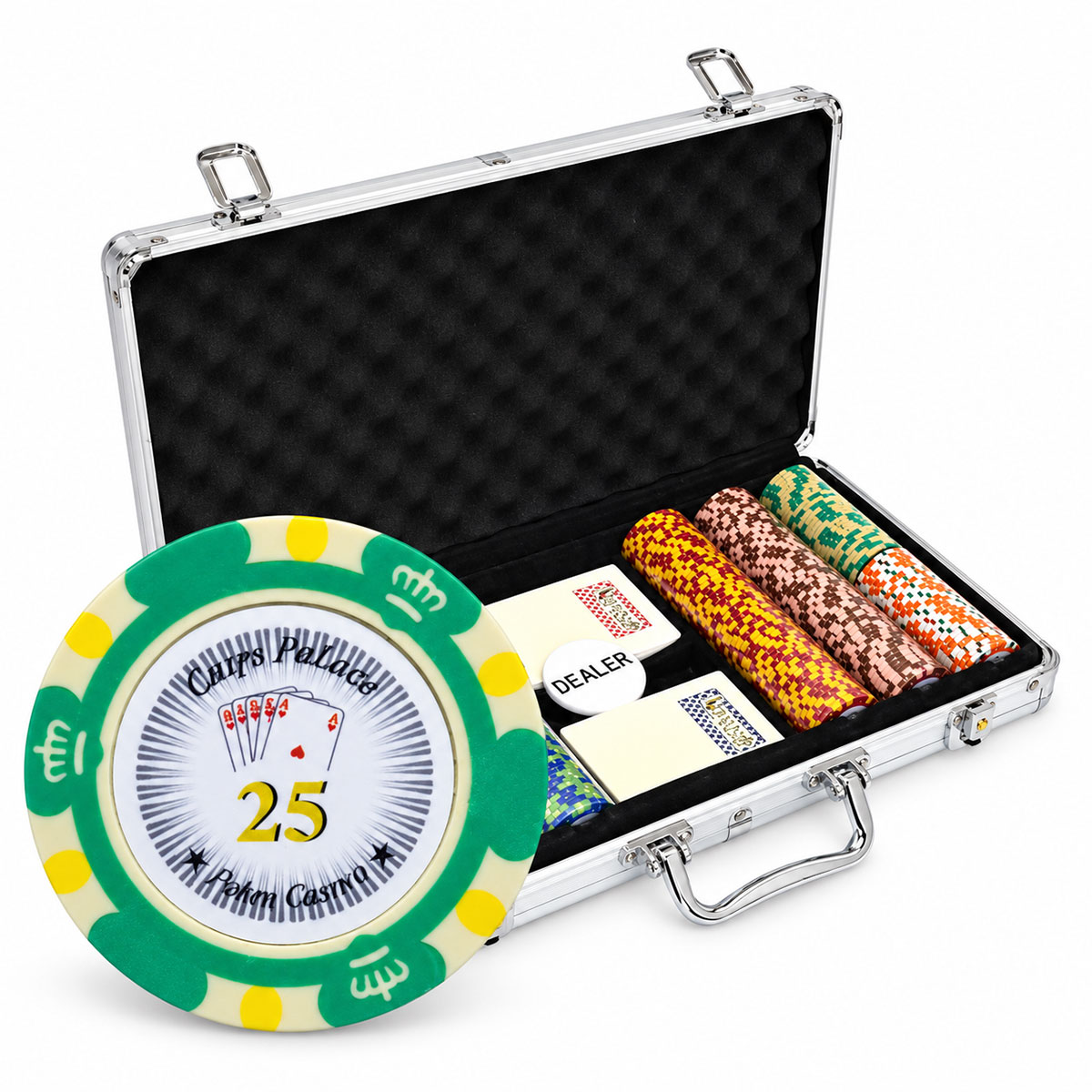
Values used: 25, 100, 500, 1,000 and 5,000. The 5,000 chips stay in the case for the color-up.
6 players, short stack of 3,000 (60 BB at 25/50)
The turbo format: a game wrapped up in about 2 hours, perfect for a poker happy hour or a weeknight.
| Value | Per player | Handed out | Left in the case |
|---|---|---|---|
| 25 | 8 | 48 | 52 |
| 100 | 8 | 48 | 2 |
| 500 | 2 | 12 | 38 |
| 1,000 | 1 | 6 | 44 |
| 5,000 | 0 | 0 | 50 (reserve) |
| Total per player | 19 chips = 3,000 |
6 players, standard stack of 5,000 (100 BB at 25/50)
The most balanced distribution for a 300-chip case: enough depth to play, and more than half of the chips in reserve.
| Value | Per player | Handed out | Left in the case |
|---|---|---|---|
| 25 | 8 | 48 | 52 |
| 100 | 8 | 48 | 2 |
| 500 | 4 | 24 | 26 |
| 1,000 | 2 | 12 | 38 |
| 5,000 | 0 | 0 | 50 (reserve) |
| Total per player | 22 chips = 5,000 |
8 players, 5,000 stack (100 BB at 25/50)
This is the upper limit of a 300-chip case for a tournament. Each player gets fewer 100 chips: make change with the 25 chips early in the game.
| Value | Per player | Handed out | Left in the case |
|---|---|---|---|
| 25 | 8 | 64 | 36 |
| 100 | 3 | 24 | 26 |
| 500 | 3 | 24 | 26 |
| 1,000 | 3 | 24 | 26 |
| 5,000 | 0 | 0 | 50 (reserve) |
| Total per player | 17 chips = 5,000 |
300-chip case: cash game distributions
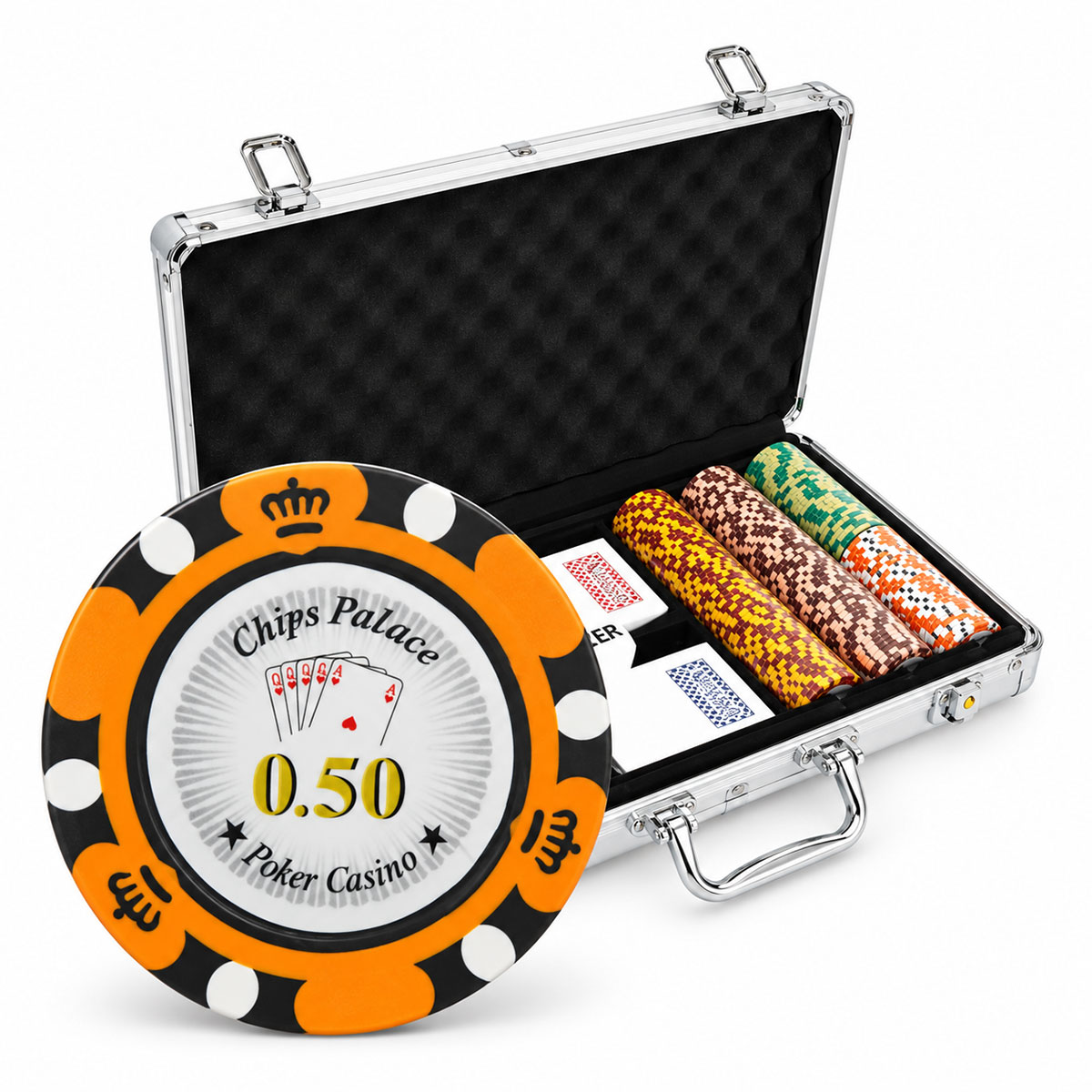
In a cash game, every chip is worth money. The buy-in (the entry amount) is usually 100 big blinds, and the bank keeps the rest of the chips for rebuys.
6 players, €0.10/€0.20 blinds, €20 buy-in (100 BB)
| Value | Per player | Handed out | Left in the case |
|---|---|---|---|
| €0.10 | 10 | 60 | 40 |
| €0.50 | 6 | 36 | 14 |
| €1 | 4 | 24 | 26 |
| €2 | 1 | 6 | 44 |
| €5 | 2 | 12 | 38 |
| Total per player | 23 chips = €20 |
162 chips remain in the bank, more than enough to fund several rebuys per player.
8 players, €0.05/€0.10 blinds, €10 buy-in (100 BB)
| Value | Per player | Handed out | Left in the case |
|---|---|---|---|
| €0.05 | 10 | 80 | 20 |
| €0.25 | 6 | 48 | 2 |
| €1 | 4 | 32 | 18 |
| €2 | 2 | 16 | 34 |
| €5 | 0 | 0 | 50 (reserve) |
| Total per player | 22 chips = €10 |
The 50 €5 chips stay in the bank: a €10 rebuy is paid with two €5 chips, which the player then breaks at the table.
500-chip case: tournament distributions
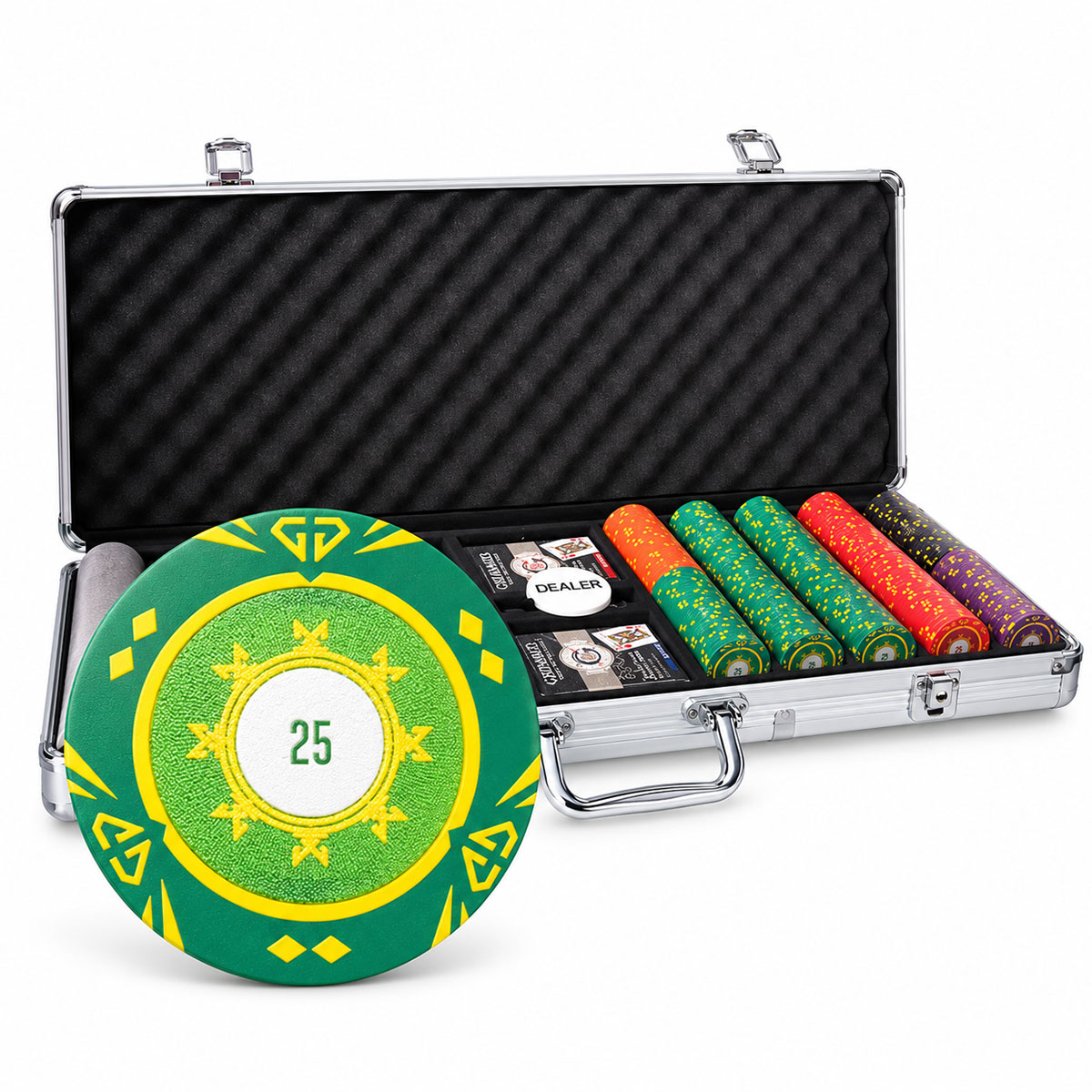
Same values as with the 300-chip case: 25, 100, 500, 1,000 and 5,000. The 200 extra chips let you play 10-handed or with deeper stacks.
10 players, short stack of 5,000 (50 BB at 50/100)
A full table in a fast format, ideal for a club tournament or an evening with two tables of 5.
| Value | Per player | Handed out | Left in the case |
|---|---|---|---|
| 25 | 12 | 120 | 30 |
| 100 | 12 | 120 | 30 |
| 500 | 5 | 50 | 50 |
| 1,000 | 1 | 10 | 40 |
| 5,000 | 0 | 0 | 50 (reserve) |
| Total per player | 30 chips = 5,000 |
10 players, standard stack of 10,000 (100 BB at 50/100)
| Value | Per player | Handed out | Left in the case |
|---|---|---|---|
| 25 | 12 | 120 | 30 |
| 100 | 12 | 120 | 30 |
| 500 | 7 | 70 | 30 |
| 1,000 | 5 | 50 | 0 |
| 5,000 | 0 | 0 | 50 (reserve) |
| Total per player | 36 chips = 10,000 |
All the 1,000 chips are handed out: at color-up time, exchange the 500 chips ten at a time for 5,000 chips.
8 players, deep stack of 10,000 (200 BB at 25/50)
The regulars' format: 200 big blinds, a long and technical game. This is the use that best justifies a 500-chip case.
| Value | Per player | Handed out | Left in the case |
|---|---|---|---|
| 25 | 16 | 128 | 22 |
| 100 | 16 | 128 | 22 |
| 500 | 8 | 64 | 36 |
| 1,000 | 4 | 32 | 18 |
| 5,000 | 0 | 0 | 50 (reserve) |
| Total per player | 44 chips = 10,000 |
500-chip case: cash game distributions
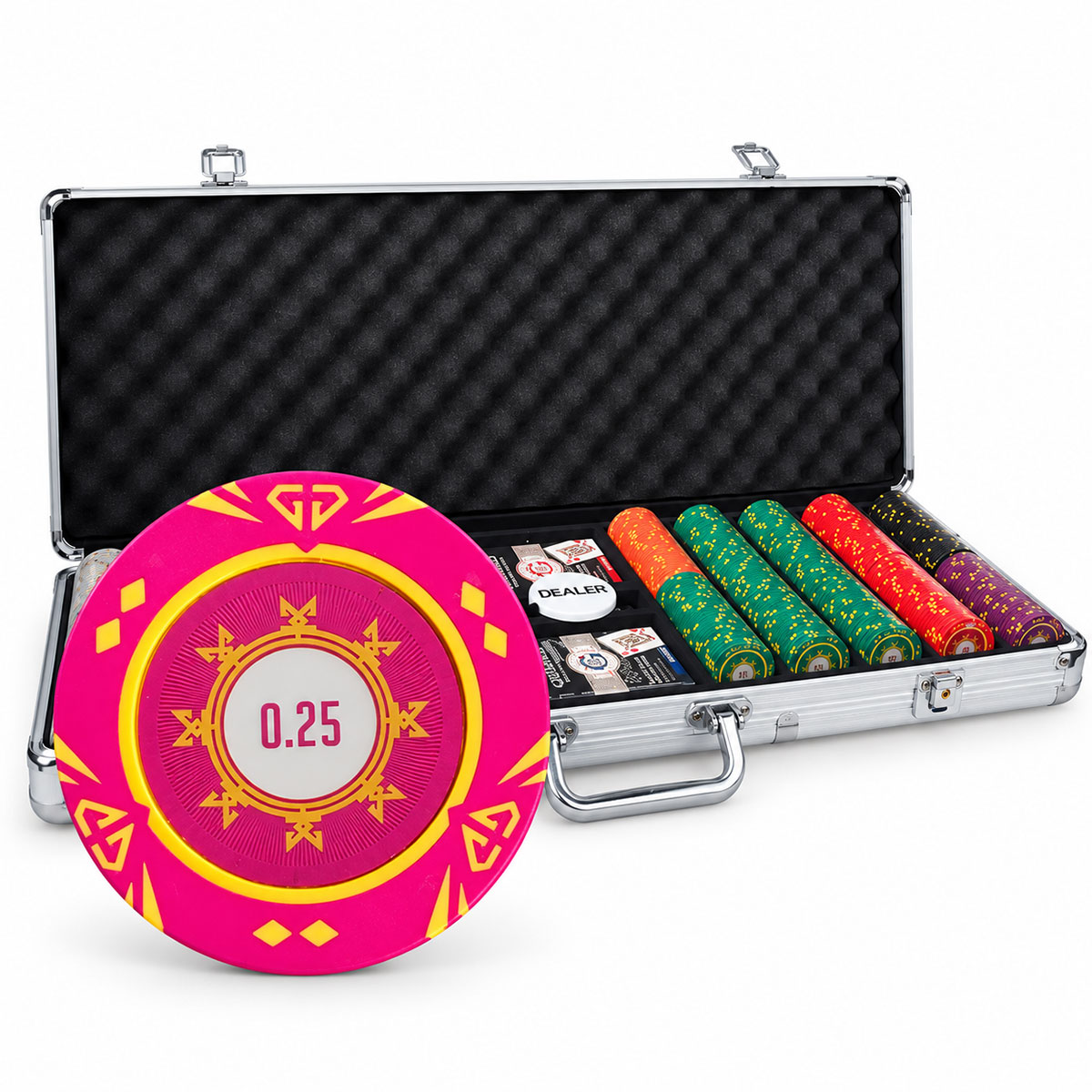
8 players, €0.10/€0.20 blinds, €40 buy-in (200 BB, deep play)
| Value | Per player | Handed out | Left in the case |
|---|---|---|---|
| €0.10 | 15 | 120 | 30 |
| €0.50 | 13 | 104 | 46 |
| €1 | 8 | 64 | 36 |
| €2 | 2 | 16 | 34 |
| €5 | 4 | 32 | 18 |
| Total per player | 42 chips = €40 |
10 players, €0.25/€0.50 blinds, €50 buy-in (100 BB)
| Value | Per player | Handed out | Left in the case |
|---|---|---|---|
| €0.25 | 12 | 120 | 30 |
| €1 | 12 | 120 | 30 |
| €5 | 5 | 50 | 50 |
| €10 | 1 | 10 | 40 |
| €25 | 0 | 0 | 50 (reserve) |
| Total per player | 30 chips = €50 |
The bank keeps 40 €10 chips and 50 €25 chips, i.e. €1,650 of rebuy capacity: enough for a long evening.
Tournament blind structure and color-up
Blinds are marked at the table with the Small Blind and Big Blind buttons, to the left of the dealer button: they move one seat each hand.



For a 5,000 or 10,000 stack with 20-minute levels, this structure works well:
25/50 · 50/100 · 75/150 · 100/200 · 150/300 · 200/400 · 300/600 · 400/800 · 600/1,200 · 800/1,600 · 1,000/2,000 · 1,500/3,000
The color-up means removing a small value that has become useless and exchanging it for a higher value. The 25 chips come out after the 75/150 level, the 100 chips after the 300/600 level. Chips that do not make up a full multiple are settled by a chip race: one card per chip, and the highest card wins the higher-value chip. That is why you should always keep high-value chips in reserve in the case.
Video: how to run a home poker tournament
300 or 500 chips: our recommendation
| Use | Players | Recommended case |
|---|---|---|
| Tournament among friends, short or standard stack | 4 to 6 | 300 chips |
| Tournament, full table | 8 to 10 | 500 chips |
| Deep-stack tournament (200 BB) | 6 to 8 | 500 chips |
| Cash game | 6 to 8 | 300 chips |
| Cash game with frequent rebuys | 8 to 10 | 500 chips |
| Two tables or club tournament | 12 to 20 | Two 500-chip cases or one 1,000-chip case |
If in doubt, go for 500 chips: the price difference is small, and you will never be caught short by an extra guest or a wish to play deeper.
Chips with or without printed values?
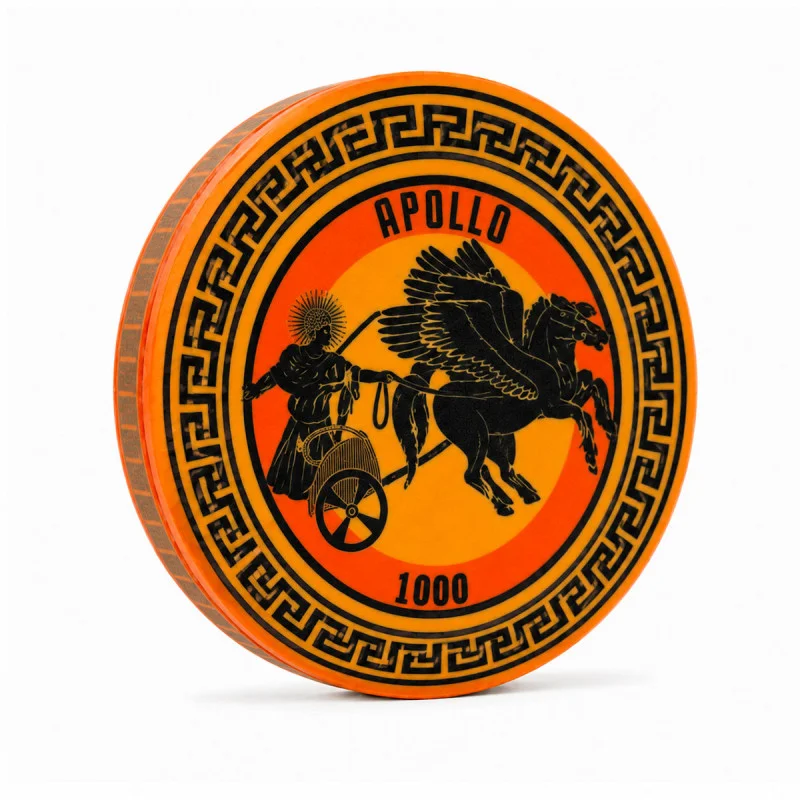
- Chips without values: you set the values yourself. This is the best choice for switching between cash games and tournaments with the same case, and every distribution in this guide applies directly.
- Chips with printed values: easier for beginners to read, but they impose their own scale. Choose them if you always play the same format.
To top up a case, add more of one value or move up to heavier chips, browse our poker chips sold individually and in rolls.
Complete your setup
A good case deserves a good playing surface: discover our poker mats and poker tables with folding legs, as well as our guide to choosing a casino table.
Frequently asked questions
How many players with a 300-chip poker case?
In a tournament, 6 players with 20 to 22 chips each, 8 players at most. In a cash game, 6 to 8 players while keeping about half the chips in the bank for rebuys.
How many players with a 500-chip poker case?
In a tournament, 8 to 10 players with 30 to 45 chips each, allowing a deep stack of 100 to 200 big blinds. In a cash game, 8 to 10 players with a comfortable bank for rebuys.
What values should poker chips have in a tournament?
The most common set is 25, 100, 500, 1,000 and 5,000. The smallest value should match the starting small blind, and each value should be 4 to 5 times the previous one to make change easy.
What is the difference between a cash game and a tournament chip distribution?
In a tournament, chips have no cash value and everything is handed out at the start. In a cash game, each chip is worth real money, the buy-in is set in euros and part of the chips stays in the bank for rebuys.
Should you choose chips with or without printed values?
Chips without values adapt to any structure, cash game or tournament. Chips with printed values are easier to read but impose their own scale: choose them if you always play the same format.