

In Texas Hold'em, the decision you make most often is also one of the most profitable: play your hand or throw it away before the flop. Good starting hand selection won't win you every pot, but it keeps you out of dozens of losing spots every session. This guide explains which hands to play, and above all why the answer changes with your position, your stack and your opponents.
Why not play every hand?
There are 22,100 different flops. With a hand like 7-2 offsuit, the flop that gives you a strong hand is extremely rare, and every time you pay to see it, you spend one big blind on average. The few pots you win never cover the bill. Poker is won by making fewer mistakes, or cheaper ones, than the other players: folding weak hands is the first of those savings.
Why not wait for Aces and Kings?
The opposite approach, playing only AA and KK, doesn't work either. You are dealt one of these two pairs about 0.9% of the time, less than once every hundred hands. Meanwhile, the blinds cost you chips every orbit. And your opponents catch on quickly: as soon as you bet, they fold, and your big pairs stop paying. You need a range wide enough to be profitable, but tight enough to avoid the traps.
The 169 starting hands in Hold'em
The 1,326 possible two-card combinations group into 169 distinct starting hands: 13 pairs, 78 suited hands and 78 offsuit hands. A pair of Aces wins about 85% of the time against a random hand; 7-2 offsuit is the worst hand in the game.
Hand categories
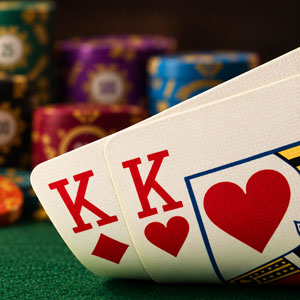
Premium hands
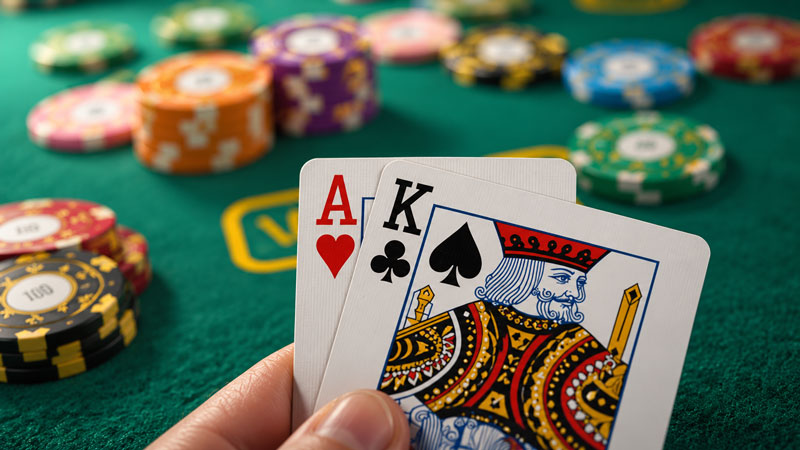
AA, KK, QQ and AK. Raise them from any position; they can stand up to a re-raise. JJ and AQ suited round out this group in most situations.
Pocket pairs
Pairs are strong before the flop and should usually be raised when nobody has entered the pot ahead of you. Small pairs (22 to 66) are mostly hoping to flop a set: they play better in position and at a good price, and worse from the blinds, where you will act first for the rest of the hand.
Speculative hands
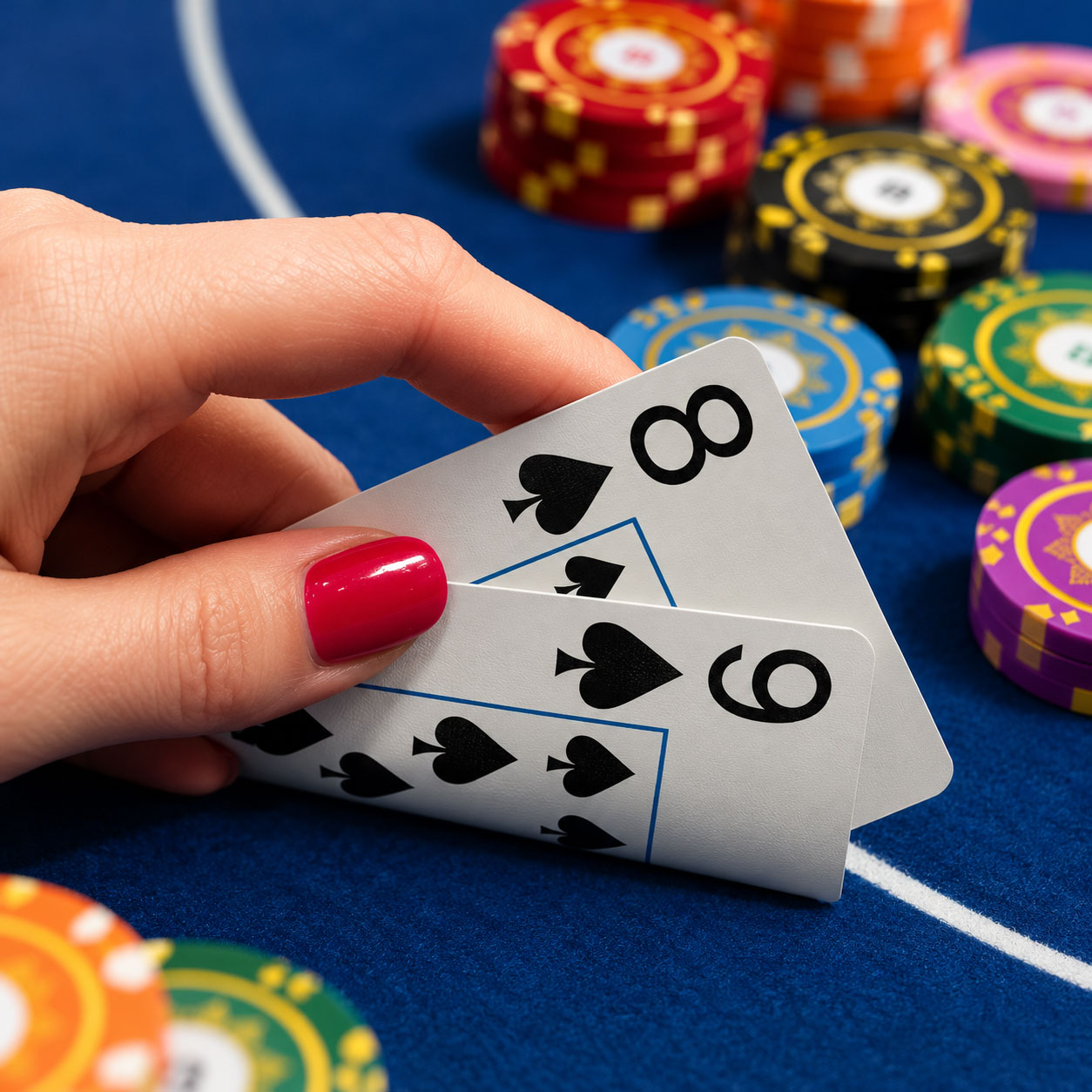
Suited connectors (98s, 76s, 65s) and suited Aces (A5s, A4s). They rarely hit the flop, but when they make a straight or a flush, they win big pots. They need deep stacks and good position.
Trap hands
Offsuit KJ, QT, A9 or A7: they look playable but are often dominated. When you pair your top card, your opponent regularly holds the same high card with a better kicker.
Strength or playability: what really matters
A hand isn't worth only its raw strength. On paper, Queen-7 suited is slightly stronger than 8-7 suited. In practice, 8-7 suited plays much better after the flop: it makes plenty of straight and flush draws, and when it pairs, you know where you stand. With Queen-7, a pair of Queens with a 7 kicker often puts you in a tough spot. Favour hands that are easy to play after the flop over hands that only win on a probability chart.
The 6 factors that decide whether to play a hand
1. Position
This is the main factor. The earlier you act, the more players remain who may hold a better hand, and the more you will play the rest of the hand out of position. On the button, you act last after the flop: you can play many more hands.
2. Number of players at the table
The fewer players, the weaker the best hand dealt is likely to be. A-10 is a very good hand heads-up, an average hand six-handed and a fragile one at a nine-handed table.
3. Your stack size
In cash games, players usually sit with 100 big blinds: enough to play speculative hands. In tournaments, once your stack drops below 15 to 20 big blinds, connectors lose their appeal and only hands that can go all-in remain playable.
4. Effective stack
What matters isn't your stack, but the smallest stack involved in the hand. If you have 250 big blinds against a player with 20, you can only win 20 blinds: play as if you had 20.
5. The action before you
Opening and calling a raise are two different things. According to David Sklansky's Gap Concept, you need a noticeably stronger hand to call a raise than to raise yourself: the raiser has shown strength, and you lose the chance to make him fold. A hand you would open from the cut-off often becomes a fold against an early-position raise.
6. Table style
- Tight table (players fold a lot): widen your range and steal the blinds.
- Loose-aggressive table (frequent raises and calls): tighten up, drop your weakest hands and get paid with your good ones.
- Passive table (lots of callers): speculative hands gain value, as they will get paid when they hit.
Which hands to open by position?
The guidelines below apply to opening with a raise when nobody has entered the pot before you. Remember the logic rather than the lists: with every seat closer to the button, your range gets wider.
| Position | 9-handed table | 6-handed table | Example hands |
|---|---|---|---|
| Early position (UTG) | 10 to 14% | 15 to 18% | 77+, AJs+, AQo+, KQs |
| Middle position (MP) | 15 to 20% | 18 to 22% | 55+, ATs+, AJo+, KJs+, QJs, JTs |
| Cut-off | 25 to 30% | 27 to 32% | 22+, A2s+, ATo+, K9s+, suited connectors |
| Button | 40 to 50% | 40 to 50% | All pairs, most Aces, suited Kings and connectors |
| Small blind | Variable | Raise or fold, avoid completing | |
Raise rather than call
When you enter a pot, do it with a raise of 2.5 to 3 times the big blind, adding one blind for each player who has already called. Simply limping takes away two ways to win: making everyone fold before the flop, and keeping the initiative for the rest of the hand.
Beginners: start tight
If you are new to the game, play the low end of the ranges above, or even tighter. Your decisions after the flop will be simpler and your mistakes cheaper. Then widen your range gradually, position by position, as your post-flop game improves. Keep the chart in front of you during your first sessions: within a few weeks, it will become second nature.
The gear for your games
To practise at home in real conditions, equip your table with our poker chips, a poker mat with numbered seats to visualise positions clearly, or one of our folding-leg poker tables.
Frequently asked questions
How many starting hands are there in Texas Hold'em?
There are 1,326 two-card combinations, which group into 169 distinct starting hands: 13 pairs, 78 suited hands and 78 offsuit hands.
What is the best starting hand in poker?
A pair of Aces (AA). It wins about 85% of the time against a random hand and remains the favourite against every other starting hand.
Why not play only Aces and Kings?
Because you are only dealt them about 0.9% of the time. The blinds would cost you too much between big pairs, and your opponents would fold as soon as you bet.
What is the Gap Concept in poker?
It is a principle from David Sklansky: you need a stronger hand to call a raise than to raise yourself, because the raiser has already shown strength.
Should you play suited connectors?
Yes, in position, at a good price and with deep stacks. They rarely hit the flop, but win big pots when they make a straight or a flush.